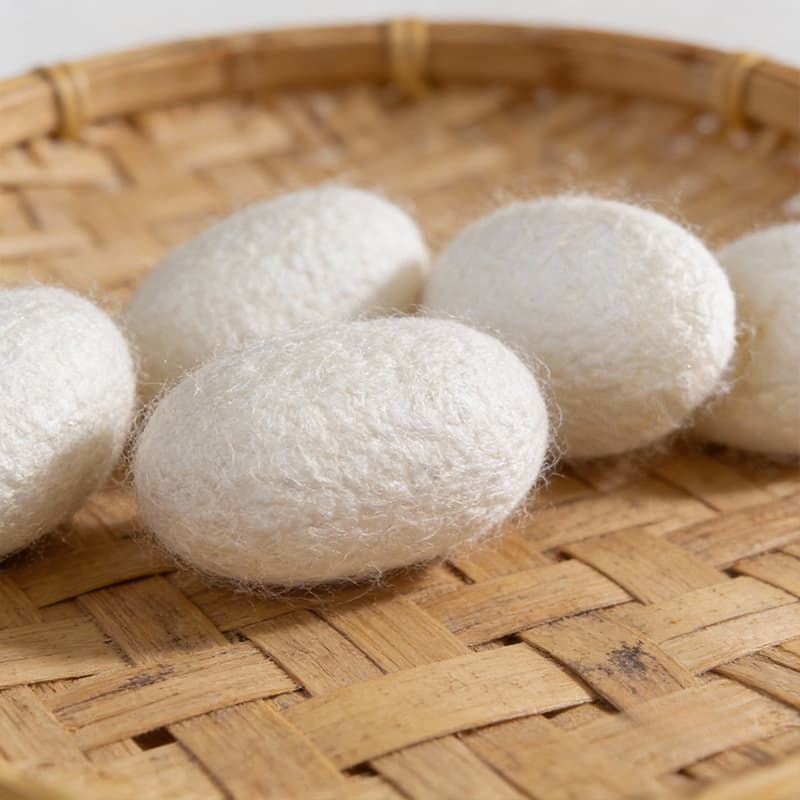
After the frenzy of eating comes the stillness of creation. The silkworm, now plump and mature, seeks a corner. It begins to swing its head in a slow, figure-eight motion, and from a tiny spinneret, it draws out a liquid protein. This isn’t “spit”; it’s liquid silk, which hardens instantly upon contact with the air.
For the next 72 hours, the worm will spin a single, unbroken filament around its body—a thread that can stretch over a kilometer long. It is building its own sanctuary, a chamber for metamorphosis. What emerges from this labor is not a stark white pod, but a small, ovoid jewel in shades of warm cream, soft gold, and buttery yellow. It feels surprisingly firm and dense in the palm.
In the village, they call this “setting the treasure.” The harvest is done entirely by hand. The gatherers move with a practiced gentleness, feeling for the perfectly formed, unblemished cocoons. There’s a palpable respect in the action. This is not merely collecting; it’s curating. Each cocoon represents the culmination of a month of meticulous care and a lifetime of instinct.
Holding one, you hold a paradox. It is both an end and a beginning. Inside, the caterpillar is dissolving, beginning its transformation into a moth. Yet, for our purposes, this moment of pupation is where the silk story pauses. To allow the moth to emerge would be to break the kilometer-long thread into a million useless pieces.
This is the first and most profound ethical moment in our craft. We must intervene in the lifecycle. The villagers approach this with a sober gratitude. Nothing is wasted. The moths that are allowed to emerge (for breeding the next generation) are treated with care. There is no casual disregard here, only a conscious acknowledgment of the sacrifice inherent in creating this material.
The cocoon, therefore, is more than just a vessel of potential silk. It is a symbol of transition, of protected change. It teaches us about the strength found in vulnerability and the incredible resilience of a single, continuous thread. When we later unwind it, we are not just extracting a fiber; we are honoring the integrity of a self-made sanctuary, and carrying forward the intention woven into its very walls.