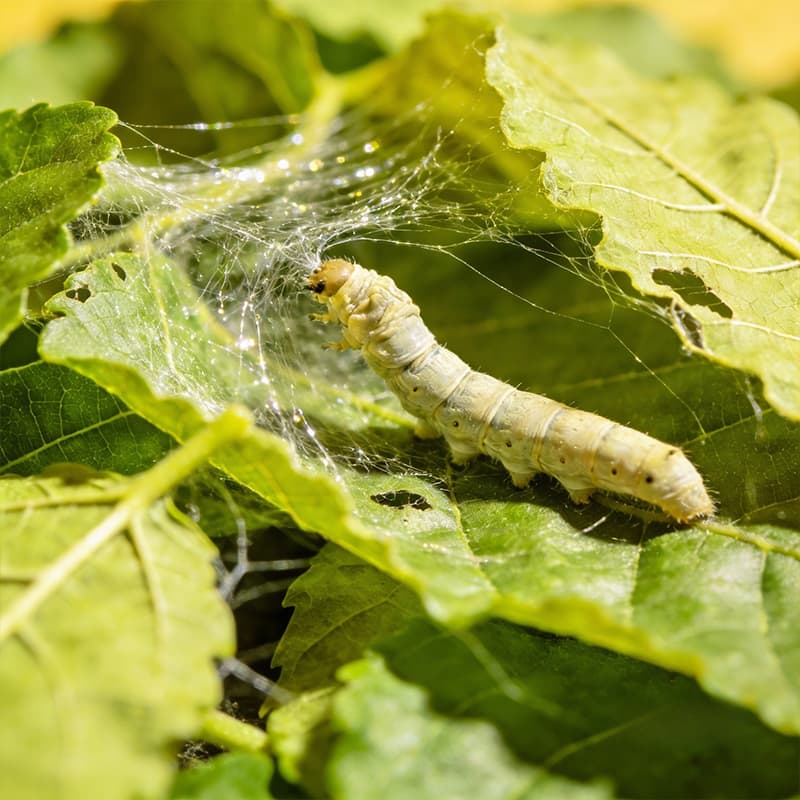
Step into the rearing room, and the first thing you notice is the sound. Not a smell, but a sound—a low, steady, rhythmic rustle, like rain on dry leaves. It’s the sound of 30,000 caterpilars having the most important meal of their lives. This is the nursery, the heart of the transformation, and it runs on a single currency: fresh mulberry leaves.
The Bombyx mori silkworm is arguably the most pampered, fragile, and single-minded creature on the planet. For roughly one month, its entire existence is consumption. It will eat, sleep, shed its skin, and eat again, growing exponentially until it is ready for its final act. It eats only one thing: the tender, perfect leaves of the white mulberry tree. Not the old, tough ones. Not the dusty ones. The best.
This is where the village’s most intimate knowledge comes into play. The elders, often the grandmothers, can “read” a tray of worms at a glance. They know the difference between a hungry rustle and a restless one. They understand that the temperature must be just so, the air humid but not damp, the leaves clean and dry. A sudden draft, a loud noise, the slightest whiff of perfume or smoke, and the entire delicate batch can be lost.
Watching them work is to watch a kind of gentle, focused reverence. They handle the worms not with tools, but with deft fingers, transferring them to fresh beds of leaves with a touch so light it seems to defy gravity. There is no automation here that can match this calibrated care. This is husbandry in its purest form: protection through profound attention.
It’s a humbling process. We are not the makers here; we are the concierges. We provide the perfect conditions for a ancient, biological miracle to unfold on its own strict schedule. The worm’s sole purpose is to spin its cocoon, and our sole purpose during these 30 days is to ensure it has everything it needs to do its one job perfectly.
That soft rustling sound, then, is the soundtrack of potential being built, bite by meticulous bite. It’s the sound of raw material being created from leaves and life. When we collect the resulting cocoons, we’re not harvesting a commodity. We’re gathering the finished work of our tiny, ravenous, and utterly essential partners.