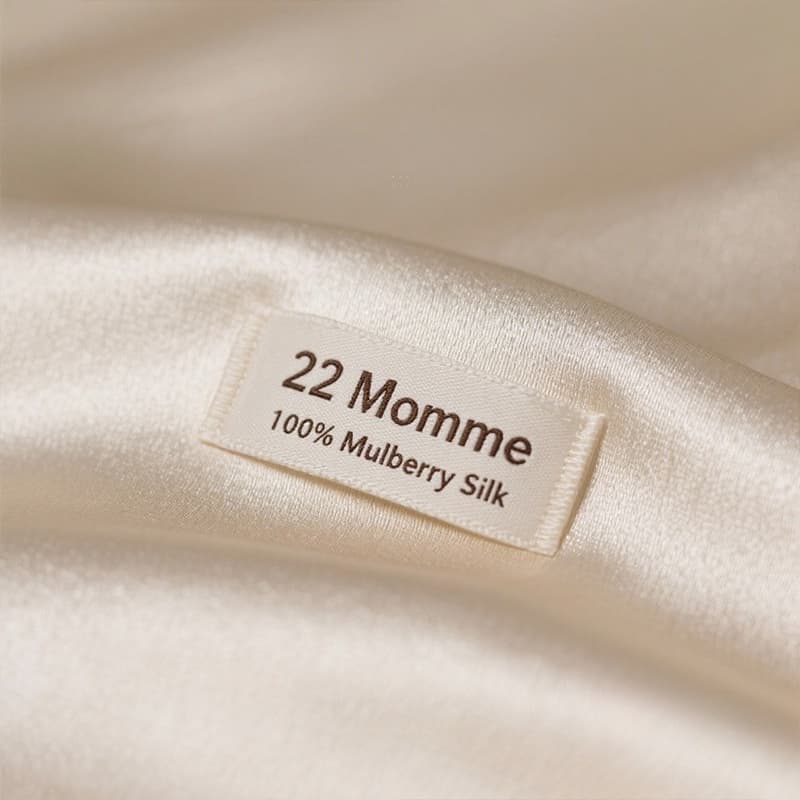
Silk is synonymous with luxury, comfort, and elegance. If you're considering buying silk, you've likely seen the term "momme" on product descriptions and labels. What exactly does "momme" mean? And how can understanding it help you make a more informed buying decision? In this guide, we'll teach you how to interpret silk labels and help you become a knowledgeable and savvy silk consumer.
Understanding "Momme": The Key to Silk Quality
Momme is commonly used to express the weight of silk fabrics and is widely adopted worldwide to measure the weight and density of silk fabrics. You can think of it as the yarn count of cotton, only specifically designed for silk.
Momme Definition:
Momme (abbreviated as "mm"), 1 momme = 4.3056 grams per square meter. For example, 25mm = 25 * 4.3056 = 107.64 grams per square meter. The higher the number, the more silk is contained per unit area, the thicker and denser the silk, and the better the quality.
Why is the momme value important? Momme value directly affects the following aspects:
- Durability: Silks with higher momme values are thicker and have a longer lifespan.
- Feel: Silks with lower momme values are generally softer and more breathable, while silks with higher momme values are thicker and more luxurious.
- Price: Silks with higher momme values and greater thickness are generally more expensive because they use higher-quality materials.
Understanding momme values can help you choose the right silk for your needs, whether you want an elegant choice at a reasonable price or a durable, investment-grade silk.
Deciphering Silk Labels: A Buying Guide
Silk labels often hold the secret to a product's true quality. Savvy consumers should pay attention to the following:
Common Elements of Silk Labels:
- Fabric Type: Look for the label "100% Mulberry Silk." Mulberry silk, known for its long fibers, softness, and durability, is considered the gold standard for silk bedding and clothing.
- Momme Count: Generally indicated as 16mm, 19mm, 22mm, or higher.
- Composition Label: High-quality silk brands prioritize transparency, only labeling "100% Silk" or "100% Mulberry Silk." If you see terms like "blended" (e.g., "silk blend," "rayon"), the product may contain polyester or other synthetic fibers, which significantly alter its feel and lifespan.
Note:
Misleading names, such as "satin silk." This refers to a weaving method that mimics silk, not the fiber itself.
Momme count is vague or missing (if absent, it's not silk).
Momme Numbers Demystified: What Do They Really Mean?
The momme number isn’t just a technical detail—it’s your best clue for determining whether a silk item meets your specific needs.
Momme Range and Everyday Use:
- 8–14 Momme: Lightweight, sheer, and often used for summer scarves or delicate lingerie.
- 16–19 Momme: Standard for pillowcases, lighter clothing, and fine bedding. Offers good durability with a delicate feel.
- 22–25 Momme: Premium choice for bedding, luxury robes, and silk sheets. Thicker fabric, more substantial drape, and superior longevity.
- 30+ Momme: Ultra-heavy silk, rarely needed outside of upholstery or heavy drapery.
Pros and Cons:
- Lower Momme: Soft, airy, affordable, but less durable and may snag easily.
- Higher Momme: Dense, feels more luxurious, lasts longer, but usually comes with a higher price tag.
When purchasing, consider both the intended use and the feel you prefer. Higher momme is a smart investment for items like sheets and pillowcases that face frequent use.
Common Silk Shopping Mistakes and How to Avoid Them
Even seasoned silk buyers can fall for marketing traps! To be a truly savvy silk shopper, watch out for these pitfalls:
- Ignoring the Momme:If the seller doesn’t list it, ask—or move on. Avoid “silk” that lacks momme information.
- Getting Fooled By “Satin”:Remember: satin is a weave, not a material. “Satin” fabric could be polyester or nylon.
- Overlooking Care Labels:Genuine silk needs gentle care. If the label says “machine wash and dry,” be skeptical of its purity.
- Falling for Bargain Prices:If it sounds too good to be true, it probably isn’t authentic. Real silk—especially higher momme—comes at a price.
- Missing Certifications:Trust only products with safety and environmental certifications, especially for items in close contact with skin.